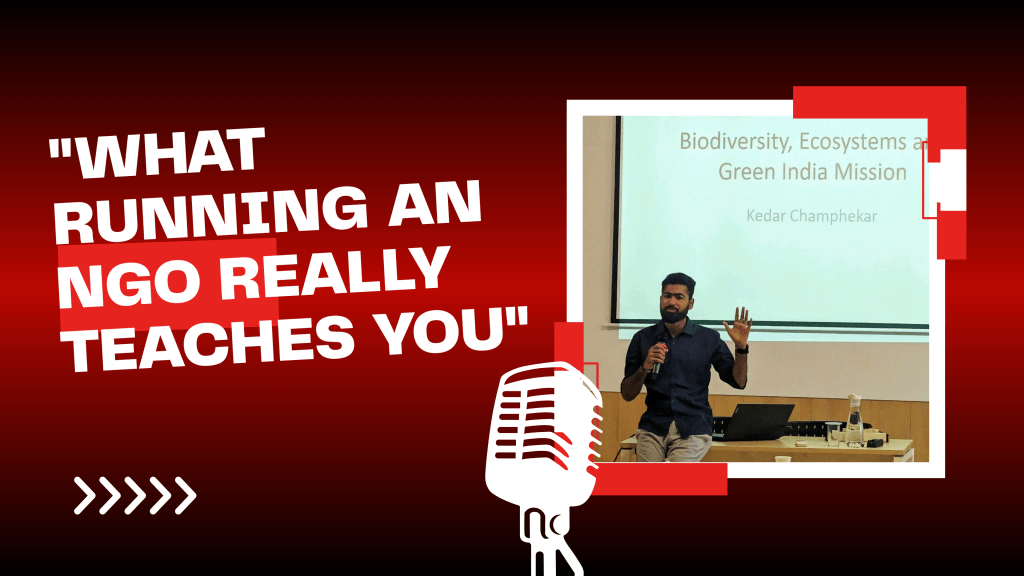
When I started Marpu Foundation in 2019, I was a young man with big dreams but no rulebook. No one teaches you how to lead an NGO. There is no MBA for social impact. There is no manual for convincing a corporate partner to trust you with their CSR funds. There is no guide for motivating volunteers who work without salaries.
7 Years later, Marpu Foundation operates across 23 states with 39 chapters. We have touched over 10 million lives. We work with 250 corporate partners, including 40 Fortune 500 companies. We have engaged over 12 million volunteers.
But here is the truth: none of this happened because I had all the answers. It happened because I learned the hard way. These are the leadership lessons no one talks about.
1. Your Childhood Shapes Your Leadership More Than Any Degree
My father served in the armed forces for over two decades. He retired when I was fourteen. Growing up in cantonment areas meant living in terrains flanked by woods, hills, and rivers. That childhood forged an emotional and spiritual connection with nature that would later define my life’s mission.
I did not learn leadership from a textbook. I learned discipline from watching my father. I learned resilience from adapting to new cities every few years as an army kid. I learned to connect with diverse people because that was the only way to survive constant relocations.
The lesson: Your background is not a limitation. It is your foundation. Whatever shaped you as a child is preparing you for the leader you will become. Do not run from your roots. Build on them.
2. If Existing Solutions Worked, the Problem Would Be Solved
This is my core philosophy. I say it often: “If existing solutions are already successful, then the problem must have been solved. And it is not. So we need more new ideas into reality.”
When I started, people told me there were already too many NGOs in India. Why start another one? My answer was simple. Poverty still exists. Environmental destruction still continues. Education gaps still persist. If the existing approach was working, we would not still have these problems.
The lesson: Do not follow the crowd just because “this is how things are done.” Question everything. Innovate relentlessly. The world does not need more of the same. It needs leaders willing to think differently.
3. You Can Scale Without Foreign Funding
This is something most people do not believe until they see it. Marpu Foundation scaled to 23 states without receiving a single rupee from foreign donors. Not one.
We made a conscious decision early on. We wanted to remain independent. We wanted every project to reflect the real needs of Indian communities, not donor mandates from abroad. We wanted complete transparency in every rupee spent.
Was it harder? Absolutely. Did it take longer? Yes. But today, our autonomy is our greatest strength. Every initiative we run is designed based on ground realities, not external agendas.
The lesson: Self reliance is not just a government slogan. It is a leadership principle. When you build from within, you build something that lasts. Dependency is comfortable in the short term but dangerous in the long term.
4. Volunteers Are Not Free Labour. They Are Your Greatest Asset.
Here is a mistake I see many NGO leaders make. They treat volunteers as free labour. Get them in, extract work, move on. That is not leadership. That is exploitation.
At Marpu, we have engaged over 12 million volunteers. That number is not an accident. It happened because we treat volunteers with dignity. We invest in their training. We turn every volunteer into a changemaker. We make them feel like they belong to something larger than themselves.
A colleague once said about me: “No matter how tense a meeting, Raghu made sure everyone left with a smile.” That was not a conscious strategy. It was a belief. People give their best when they feel valued.
The lesson: Leadership is not about extracting value from people. It is about creating value for them. When you take care of your people, they take care of your mission.
5. Corporate Partners Want Impact, Not Stories
In the early years, I made a mistake that many NGO leaders make. I thought corporates wanted emotional stories. I would go into meetings with heart wrenching tales of the communities we served.
I was wrong.
Corporate CSR teams have targets. They have budgets. They have compliance requirements. They want to know: Can you deliver? Can you measure impact? Can you handle scale?
Today, we work with over 250 corporate partners. We handle CSR objectives for Fortune 500 companies. We did not get there by being emotional. We got there by being professional.
The lesson: Learn to speak the language of your partners. NGO leaders often think passion is enough. It is not. You need systems. You need data. You need professionalism. Passion opens doors. Professionalism keeps them open.
6. Recognition Means Nothing If You Forget Why You Started
In 2019, I received the Chakra Award, often called India’s Noble. In 2025, I was recognized with the Champions of Impactful CSR Leader Award by ET Edge Times. Marpu Foundation has been called the “Best NGO in India” by various accreditations.
These recognitions are humbling. But I will be honest with you. Awards can be dangerous.
The moment you start chasing recognition, you stop chasing impact. The moment you make decisions based on what will look good on a stage, you stop making decisions based on what will actually help communities.
The lesson: Awards are milestones, not destinations. Accept them with gratitude. Then get back to work. The real recognition is in the smiles of the people you serve, not the trophies on your shelf.
7. Leadership is Handling What You Did Not Sign Up For
When you start an NGO, you think your job is to serve communities. That is the mission. That is what you signed up for.
But here is what no one tells you. Ninety percent of your time will go into things you did not sign up for. Compliance paperwork. Donor meetings. Team conflicts. Legal registrations. Financial audits. Partnership negotiations.
I studied at the National Law University. But nothing in law school prepared me for the operational chaos of running a growing organization. You learn by doing. You learn by failing. You learn by figuring it out on the spot.
The lesson: Leadership is not about doing what you love. It is about doing what is necessary so that others can do what they love. The unglamorous work is the real work.
8. Your Team’s Growth Matters More Than Your Organization’s Growth
In the early years, I was obsessed with numbers. How many states can we expand to? How many volunteers can we engage? How many corporate partners can we sign?
Then I realized something. An organization cannot grow beyond the capacity of its people. If your team is not growing, your impact will eventually plateau.
Today, I spend more time developing people than developing programs. Training. Mentorship. Opportunities to lead. When you invest in people, they invest in your mission.
The lesson: Stop asking “How big can we grow?” Start asking “How strong can we grow?” Scale without depth is fragile. Depth creates scale that lasts.
9. Saying No is the Hardest Leadership Skill
When you run an NGO, everyone wants a piece of you. Corporates want partnerships. Media wants interviews. Volunteers want attention. Communities want more programs. Your team wants more resources.
Early on, I said yes to everything. I thought that was what good leaders do. I was wrong. I burned out. Projects suffered. Quality dropped.
The hardest word in leadership is “no.” No to opportunities that do not align with your mission. No to partnerships that compromise your values. No to requests that stretch your team too thin.
The lesson: Every yes is a no to something else. Protect your focus. Protect your energy. Protect your mission. Saying no is not selfish. It is strategic.
10. The Loneliest Moments Are the Most Important
No one talks about this. Leadership is lonely. Especially in the social sector.
There will be nights when you question everything. When funding falls through. When a project fails. When a team member you trusted lets you down. When the impact you dreamed of feels impossibly far away.
In those moments, you are alone. No award will comfort you. No recognition will help. You have to find something deeper within yourself.
For me, it is the memory of growing up surrounded by nature. The connection I felt with those woods, hills, and rivers as a child. That is where I go in my mind when things get hard. That is what reminds me why I started.
The lesson: Find your anchor. The thing that grounds you when everything else is shaking. Leadership is not about being strong all the time. It is about knowing where to find strength when you have none left.
Final Thoughts
Ten years is a long time. But it is also just the beginning.
Marpu means transformation. That is what we strive for every day. Not charity. Not handouts. Transformation. In communities. In volunteers. In corporate partners. In ourselves.
If you are reading this and thinking about starting your own journey in the social sector, here is my advice: Start now. Do not wait for the perfect moment. Do not wait until you have all the answers. You never will.
The best leaders are not the ones who have everything figured out. They are the ones willing to figure it out as they go.
Be the change from within, and the world around you will follow.
Write to me at raghu@marpu.org or connect with me on LinkedIn. Let us keep the conversation going.
 KADIRI RAGHU VAMSI
Leave a comment