Workshops
Workshops and training
Practical workshops by Raghu Vamsi Kadiri for CSR teams, HR leaders, NGO founders, volunteer managers and student leaders. Each one ends with something the room can use the next morning.

Workshops he runs
Eight workshops, each adapted to the organisation in the room.
Designing a Volunteer-First CSR programme
How volunteer-first programmes differ from programmes that merely include volunteering; mapping your Schedule VII areas and the SDGs; which roles volunteers take and which roles you pay for; how to split the budget; and how to measure on two axes, programme outcomes and volunteer contribution.
You leave with a one-page blueprint for one programme, ready for your CSR committee.
Employee volunteering that lasts
Choice over compulsion, skills-based roles, a calendar that fits the business year, getting managers on board, recognition that people value, and reporting that is honest about participation.
You leave with a draft twelve-month volunteering calendar and a short list of roles for your teams.
Starting and registering an NGO in India
Choosing between a trust, a society and a Section 8 company; tax registrations for exemption and for donors’ deductions (the familiar 12A and 80G); CSR-1 for CSR funding; NGO Darpan; the basics of FCRA; and a first-year compliance calendar. Built on Raghu’s book and Marpu’s own early years.
You leave with a registration roadmap and a checklist for your first year.
Getting CSR-ready: a workshop for NGOs
What a company checks before it funds you, the due diligence pack, a proposal a CSR head actually reads, realistic budgets, reporting and utilisation, and how to keep a partner for more than one year.
You leave with a due diligence checklist and a proposal outline you can reuse.
Volunteers who come back
Recruiting the right people, onboarding in an hour, giving every volunteer a real role, recognition, and the follow-up that turns a first event into a habit.
You leave with a retention plan for your next three events.
Social entrepreneurship 101
Choosing a problem you can stay with, choosing between a nonprofit and a social enterprise, the first funding, the first team, and how to keep going when it is slow.
You leave with a one-page venture canvas and your next three steps.
Generative AI for nonprofit teams
Useful prompts for proposals, reports and volunteer coordination; keeping personal data out of public tools, in line with India’s data protection law; checking facts; and the parts of the work that should stay human.
You leave with a prompt library and simple team guidelines.
Faculty development and NSS programmes
Community engagement in higher education, designing service projects students take seriously, working with NGO partners, and measuring what changed.
You leave with a semester plan for one service project.
In the room
Workshops run on questions, not slides. Students, employee volunteers and field teams, from classrooms to corporate atriums.
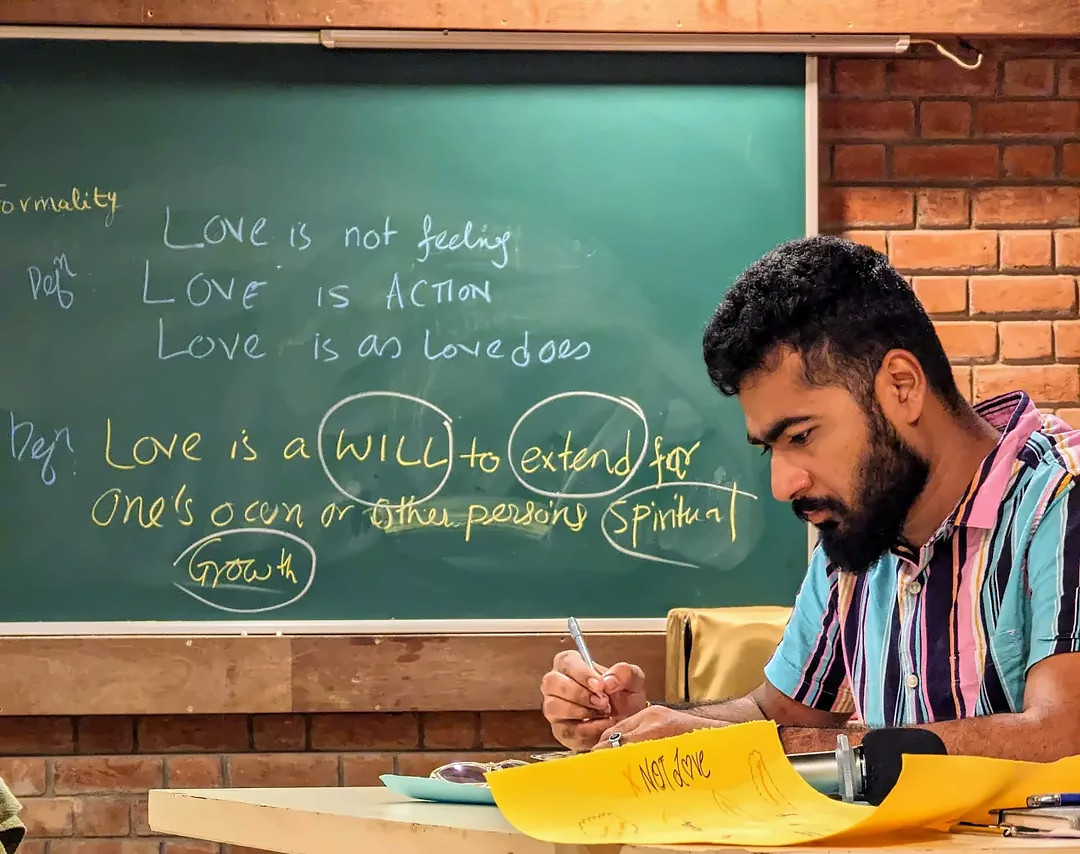
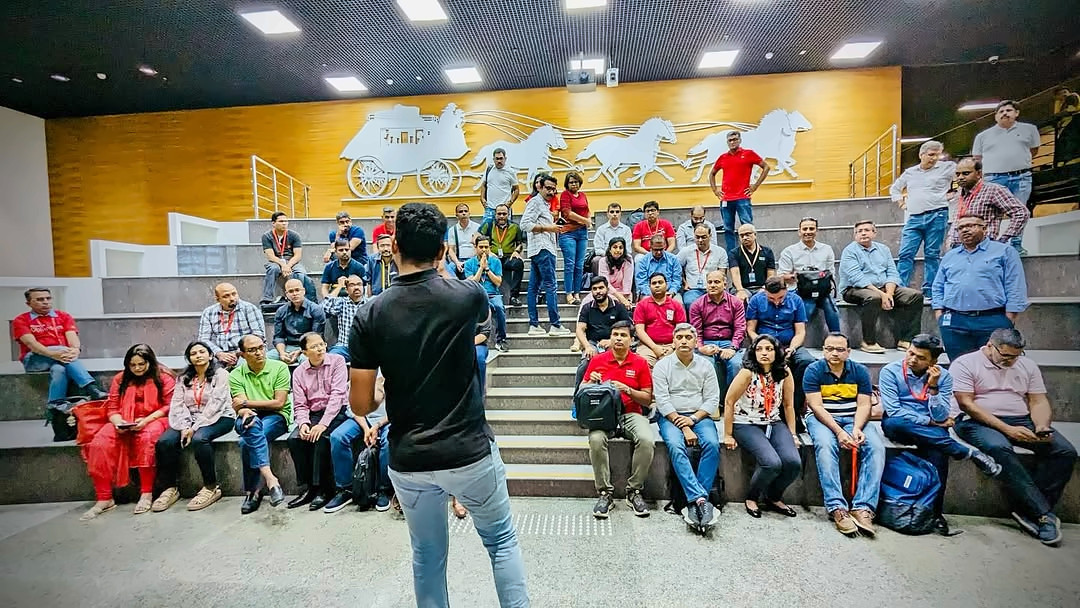
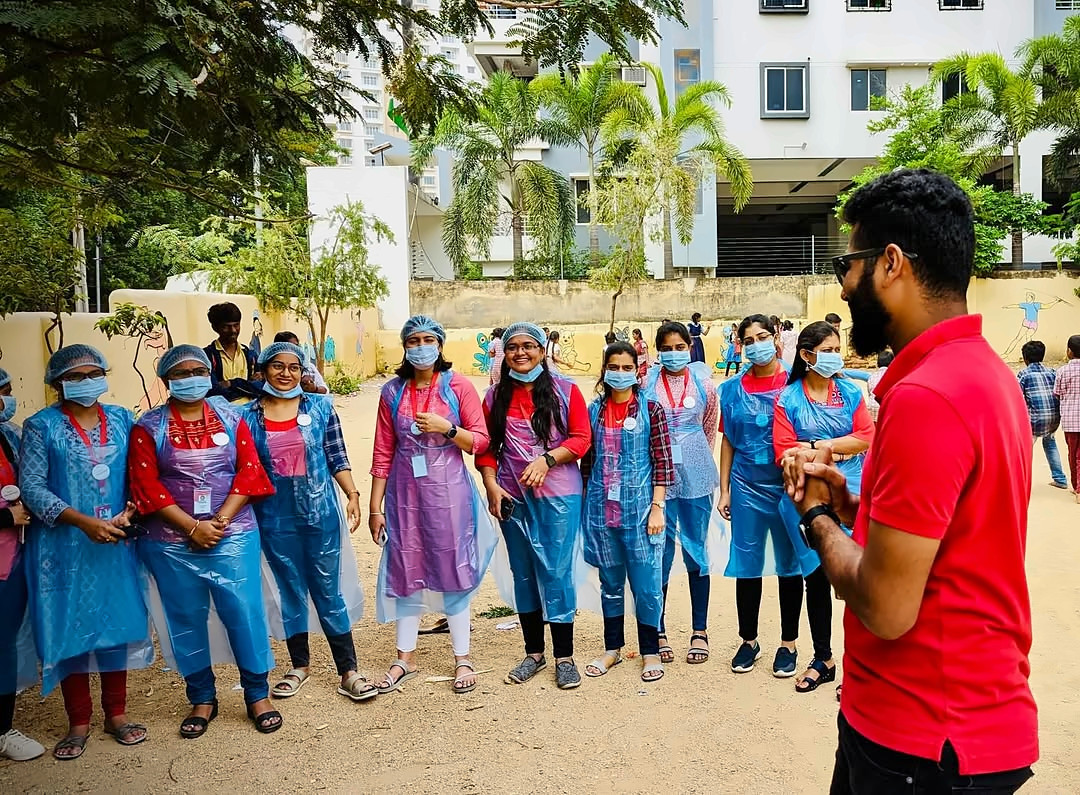
Formats
90-minute session
One focused topic, with exercises. Fits a lunch-and-learn or a conference slot.
Half day
The usual format: enough time to understand, practise and plan.
Full day
For teams that want to leave with a finished draft: a programme, a calendar or a plan.
Online cohort
Three or four shorter sessions over a few weeks, with work in between.
Train the trainer
For organisations that want their own people to run the workshop afterwards.
Bilingual delivery
English with Telugu or Hindi, for mixed groups.
How a workshop comes together
- A conversation. What the team does today, what is not working, and what a good outcome looks like.
- A short survey. Participants share their questions before the day, so the session meets them where they are.
- The workshop. Short input, real exercises on your own programmes, and decisions written down.
- Materials. Worksheets and templates participants keep.
- An optional follow-up. A review session a few weeks later.
Background reading
Participants who read ahead get more from the day.
Good to know
Can a workshop be customised for our team?
Yes, and it usually is. A call and a short pre-workshop survey shape the examples, exercises and depth.
Do you run workshops online?
Yes. Online workshops run as shorter sessions with exercises in between, which often works better than one long day on a screen.
How many people can attend?
Workshops work best with 15 to 60 people. For larger groups, a talk followed by facilitated breakouts works well.
Can workshops be in Telugu or Hindi?
Yes. Workshops can run in English, Telugu or Hindi.
Is there follow-up after the workshop?
A follow-up session a few weeks later, to review what the team has tried, can be added to any workshop.
Plan a workshop with Raghu.
Tell him who the participants are, what they struggle with and how much time you have.
Running employee volunteering?
Formats, measurement and how it fits CSR, in one guide.